Share on facebook
Share on twitter
Share on telegram
Share on email
  • Andhra Pradesh
  • Arunachal Pradesh
  • Assam
  • Bihar
  • Chhattisgarh
  • Goa
  • Gujarat
  • Haryana
  • Himachal Pradesh
  • Jharkhand
  • Karnataka
  • Kerala
  • Madhya Pradesh
  • Maharashtra
  • Manipur
  • Meghalaya
  • Mizoram
  • Nagaland
  • Odisha
  • Punjab
  • Rajasthan
  • Sikkim
  • Tamil Nadu
  • Telangana
  • Tripura
  • Uttar Pradesh
  • Uttarakhand
  • West Bengal
  • Mumbai
  • Delhi
  • Bangalore
  • Hyderabad
  • Ahmedabad
  • Chennai
  • Kolkata
  • Surat
  • Pune
  • Jaipur
  • Lucknow
  • Kanpur
  • Nagpur
  • Indore
  • Bhopal
  • Patna
  • Ludhiana
  • Agra
  • Varanasi
  • Kochi
  • Taj Mahal Agra
  • Hawa Mahal
  • Goa Beaches
  • Kerala Backwaters
  • Varanasi Ghats
  • Agra Fort
  • Rishikesh Ganges
  • Leh Ladakh
  • Udaipur City Palace
  • Darjeeling Hills
  • Golden Temple Amritsar
  • Mysore Palace
  • Hampi Ruins
  • Khajuraho Temples
  • Andaman Islands
  • Shimla Hills
  • Manali Himachal
  • Kaziranga National Park
  • Jaisalmer Fort
  • Mount Abu Rajasthan
  • Sundarbans Mangrove Forest
  • Thar Desert
  • Western Ghats
  • Eastern Ghats
  • Rann of Kutch
  • Valley of Flowers
  • Kaziranga National Park
  • Jim Corbett National Park
  • Nilgiri Hills
  • Andaman Islands
  • Kangchenjunga
  • Nanda Devi
  • Kamet
  • Saltoro Kangri
  • Saser Kangri
  • Anamudi
  • Trisul
  • Nun Peak
  • Kedarnath Peak
  • Hardeol
  • Ganges River
  • Brahmaputra River
  • Indus River
  • Godavari River
  • Krishna River
  • Narmada River
  • Yamuna River
  • Chilika Lake
  • Dal Lake
  • Wular Lake

Location

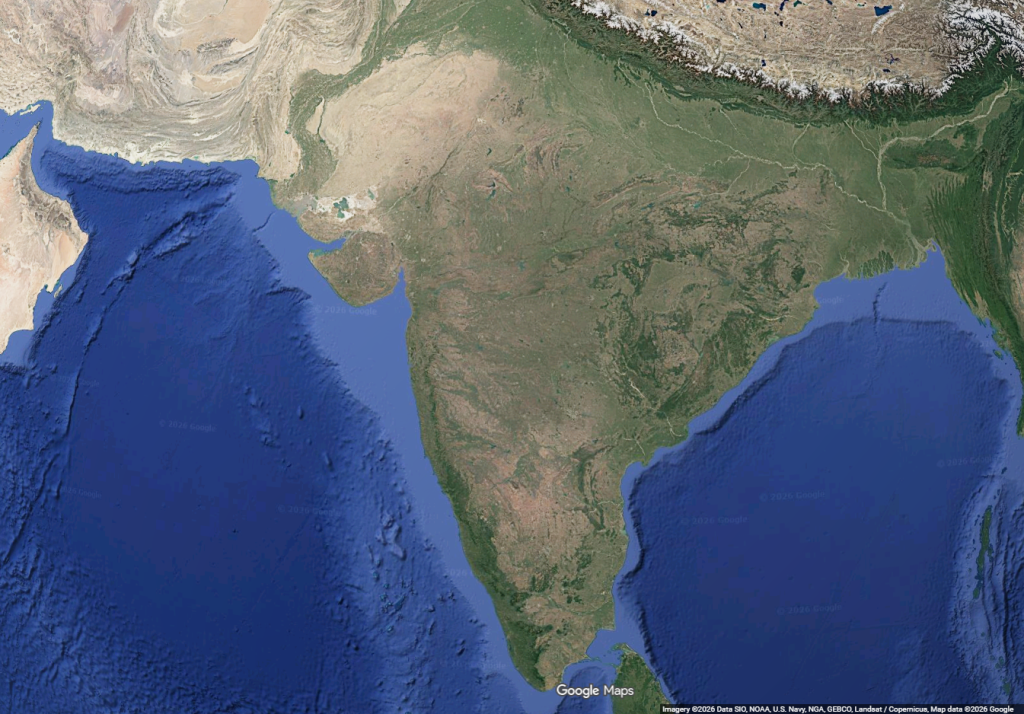
India is a large country in South Asia. It lies between the Himalayan mountains in the north and the Indian Ocean in the south. India borders Pakistan, China, Nepal, Bhutan, Bangladesh and Myanmar. Because of its position between mountains, deserts and oceans, the country has many different landscapes and climates.

map of india

Table of Contents

Travel Destinations

India offers a wide variety of travel destinations, from ancient cities and historic monuments to mountains, beaches, and national parks. Famous places such as the Taj Mahal in Agra, the colorful city of Jaipur, the beaches of Goa, and the Himalayan region of Ladakh attract millions of visitors each year. Travelers can explore spiritual centers like Varanasi, peaceful backwaters in Kerala, desert landscapes in Rajasthan, and rich wildlife areas such as Kaziranga National Park.

Many destinations in India combine natural beauty with deep cultural traditions. Visitors can see historic forts and palaces in Rajasthan, tea plantations in Darjeeling, tropical islands in the Andaman Sea, and mountain towns such as Shimla and Manali in the Himalayas. Each region offers different experiences, including local food, festivals, temples, and traditional architecture, making India one of the most diverse travel destinations in the world.

States

India is divided into 28 states and several union territories, each with its own culture, language, traditions, and landscapes. The states range from the Himalayan regions of Himachal Pradesh and Uttarakhand to the tropical coastal states such as Kerala, Goa, and Tamil Nadu. Large states like Rajasthan, Maharashtra, and Uttar Pradesh have many major cities, historic landmarks, and important cultural sites. Together, the states of India form a diverse country with different climates, natural features, and regional identities across South Asia.

Landscape

The geography of India is very diverse. The north is dominated by the Himalayas, the highest mountain range in the world. South of the mountains lies the Indo-Gangetic Plain, one of the most fertile regions on Earth. In the west is the Thar Desert, while the center and south are covered by the Deccan Plateau. India also has long coastlines along the Arabian Sea and the Bay of Bengal.

Climate

India has several climate zones. The Himalayas have cold mountain climates with snow and glaciers. The plains and plateau areas have tropical and subtropical climates. One of the most important weather systems is the monsoon, which brings heavy rains between June and September. These rains are very important for agriculture.

Nature

India is one of the most biologically diverse countries in the world. It has tropical forests, mangroves, grasslands, deserts and alpine ecosystems. Famous natural areas include the Sundarbans mangrove forest, the Western Ghats mountains, and many national parks such as Jim Corbett and Kaziranga, where rare animals like tigers and rhinoceroses live.

Rivers

India has many important rivers that support agriculture and cities. The Ganges River is the most famous and is very important for culture and religion. Other large rivers include the Brahmaputra, Indus, Godavari, and Krishna. These rivers create large fertile plains where millions of people live and farm.

Climate

India has several climate zones. The Himalayas have cold mountain climates with snow and glaciers. The plains and plateau areas have tropical and subtropical climates. One of the most important weather systems is the monsoon, which brings heavy rains between June and September. These rains are very important for agriculture.

Population

India’s population grew significantly between 2016 and 2026, increasing by more than 100 million people and becoming the largest population in the world. Now the population of India is 1 476 625 000.

It has many large cities. New Delhi is the capital, while Mumbai, Delhi, Bangalore, Kolkata, and Chennai are major economic and cultural centers. The country has many languages, religions and cultures, which makes it one of the most diverse societies on Earth.