Map of Alaska, USA
- Iran
- United Arab Emirates
- Saudi Arabia
- Qatar
- Kuwait
- Bahrain
- Oman
- Iraq
- Dubai
- Abu Dhabi
- Doha
- Kuwait City
- Manama
- Bandar Abbas
- Strait of Hormuz
- Shatt al-Arab
- Qeshm Island
- Failaka Island
- Abu Musa Island
- Port of Jebel Ali
- Port of Bandar Abbas
- Port of Dammam
- Port of Kuwait
- Port of Doha
- Port of Umm Qasr
- Ghawar Oil Field
- North Field Gas Field
- Ras Tanura Oil Terminal
- Kharg Island
- Al Jubail Industrial City
- Sir Bani Yas Island
- Strait of Hormuz
- Qeshm Islan
- Hawar Islands
- Sir Bani Yas Island
- Kharg Island
Location
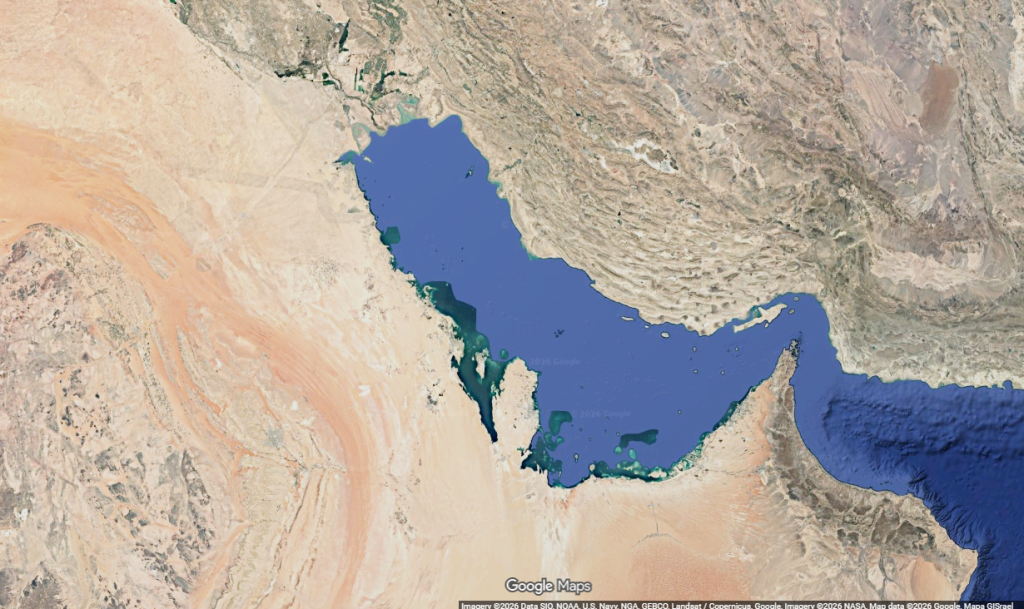
The Persian Gulf is a shallow sea in Western Asia. It lies between the Arabian Peninsula and Iran. It connects to the Gulf of Oman and the Arabian Sea through the Strait of Hormuz. The region is one of the most important maritime areas in the world.
Table of Contents
Countries
Eight countries border the Persian Gulf. These are Iran, Iraq, Kuwait, Saudi Arabia, Bahrain, Qatar, the United Arab Emirates, and Oman. Most of these countries depend on the Gulf for trade, oil export, and fishing. The coastline includes large cities and busy ports.
Size
The Persian Gulf is about 990 kilometers long. Its width varies from about 55 to 340 kilometers. It is relatively shallow, with an average depth of around 50 meters. Because it is shallow and warm, its water temperature can become very high in summer.
Economy
The region holds some of the world’s largest oil and natural gas reserves. Oil tankers travel daily through the Strait of Hormuz. The Gulf is very important for global energy supply. Many coastal cities are major financial and trade centers.
Nature
The Gulf has coral reefs, mangroves, and important marine life. Fish, dolphins, sea turtles, and seabirds live here. However, oil spills and pollution are environmental risks. Protecting marine ecosystems is a key challenge for the region.
History
The Persian Gulf has been a center of trade for thousands of years. Ancient civilizations used it for commerce between Mesopotamia, India, and East Africa. Today it remains a strategic and politically important region.