- Saudi Arabia
- United Arab Emirates
- Israel
- Jordan
- Lebanon
- Iraq
- Syria
- Oman
- Qatar
- Kuwait
- Bahrain
- Yemen
- Dubai
- Riyadh
- Jerusalem
- Doha
- Abu Dhabi
- Baghdad
- Beirut
- Arabian Desert
- Dead Sea
- Persian Gulf
- Red Sea
- Tigris River
- Euphrates River
- Zagros Mountains
- Taurus Mountains
- Mount Lebanon
- Petra
- Burj Khalifa
- Western Wall
- Wadi Rum
- Jebel Ali Port
- Ras Tanura
- King Abdullah Economic City
Location
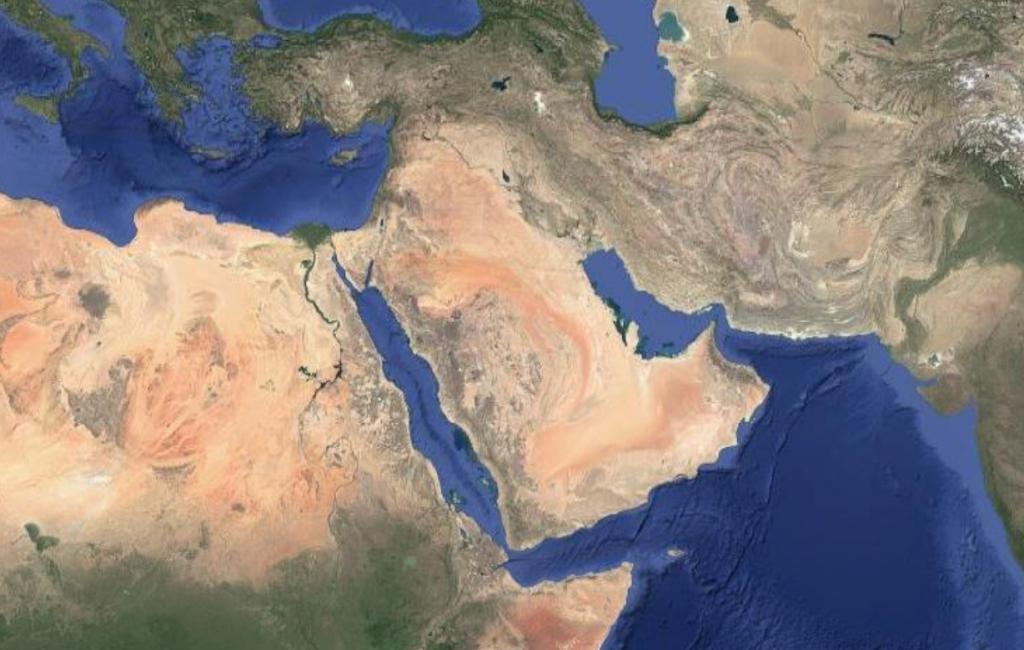
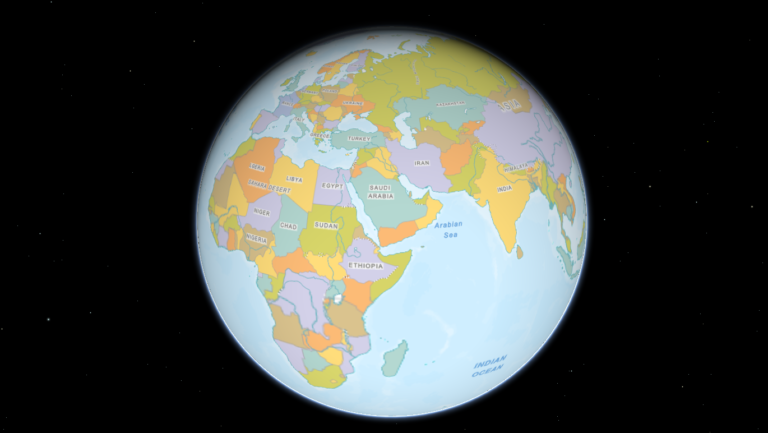
The Middle East is a region located between Europe, Africa, and Asia. It connects three continents and has an important strategic position. The region includes countries in Western Asia and parts of North Africa. It is known for its deserts, seas, and long history.
Table of Contents
Landscape
The landscape of the Middle East is very diverse. Large deserts cover much of the land, but there are also mountains, rivers, and fertile valleys. The region has long coastlines along important seas and gulfs. These natural features shape the life and economy of the people.
Climate
The climate is mostly hot and dry. Summers are very warm, especially in desert areas. Winters are usually mild, but mountain regions can receive snow. Water is limited in many places, which makes rivers and underground water sources very important.
History
The Middle East is one of the oldest centers of human civilization. Many ancient empires began here. Important religions and cultures developed in this region. Historical cities and monuments attract visitors from all over the world.
Economy
Oil and natural gas are major economic resources in many Middle Eastern countries. The region is also important for trade because of its location between continents. Modern cities, ports, and financial centers play a key role in the global economy.
People
The Middle East is home to many different cultures, languages, and traditions. Arabic is widely spoken, but there are other important languages as well. The region combines ancient traditions with modern life in fast-growing cities.